What is Web 3.0?
What is the Web even?
The World Wide Web is also commonly referred to as the Web — an interconnected system of public webpages accessible through the Internet.
Common components in the Web:
- HTTP or SMTP protocol to govern data transfer between server and client.
- URL (uniform resource locator) supplied by client to access web pages.
- HTML (hypertext markup language), a common format for publishing web documents.
These crucial components are what made the Web so great in today's context, leading to a boom in the technological age. However, there are also shortcomings about the current state of the Web that developers and users alike are trying to circumvent, mainly from the centralization of the Web.
In this post, we shall explore into some of Web 3.0 characteristics and how it compares to its predecessors.
There is a difference between URL and Domain Name although they are sometimes used interchangeably. https://techdifferences.com/difference-between-url-and-domain-name.html
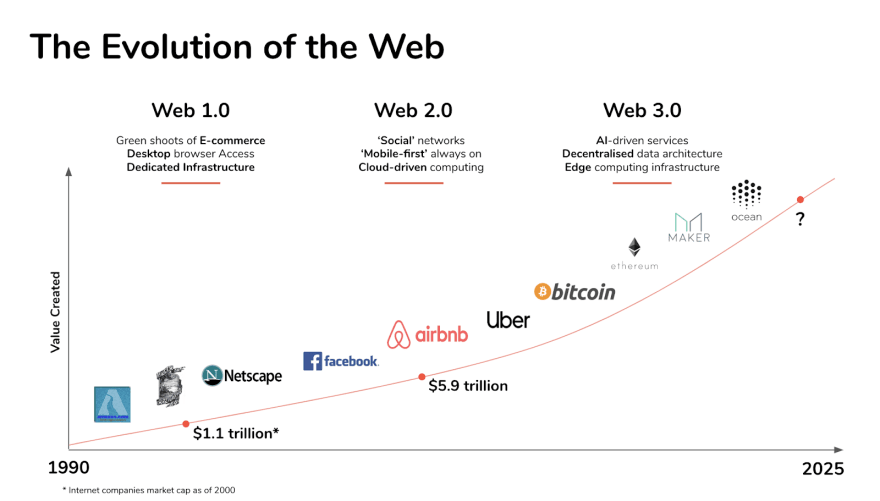
Source: Pragati Verma
Web 1.0
This is also known as the Information Era, the Birth of Wikipedia, The Free Encyclopedia and the first stage of the World Wide Web evolution. Majority of users in Web 1.0 are consumers of content where most web content are read-only static pages.
These static pages are server-side rendered. (More of SSR explanation coming soon...)
An example of these Web 1.0 static pages can be commonly found in your University Professor's personal website like the one below!
Web 2.0
Web 2.0 signifies the rise of user-generated content, usability and interoperability for end users. The birth of web applications such as Facebook, Twitter and many other applications that you are addicted to.
Web pages are redesigned to be heavy on client-side rendering with popular framework such as React.js, which is also the framework used to make this blog. There has also been a rise in a combination of server-side and client-side rendering which brings the best of both worlds.
Today's Web
The current state of the Web, or rather the lack of state, is what contributes to its major success due to the simplicity and standardization of the Internet protocols as mentioned earlier. However, state is crucial to the development of services and applications as it represents value in the form of data.
As explained by Emre Tekisalp, two key developments to overcome stateless:
- Cookies to preserve state and stored in user's local device (More on cookies...)
- Centralized service providers to hold user state in their own machines
Majority of the Web is operated by centralized platforms which are the tech giants that offers these incredible services. It is only natural that the data is also controlled and kept by the same companies that operate them. Hence, many have argued that the Internet benefit these centralized companies way more than it does to the public.
And finally, Web 3.0
The next generation of web, also known as the executable web. Data is not owned but rather shared, with services on the blockchain.
- Web 3.0 operates on decentralized protocols (founding blocks of blockchain and cryptocurrency technology)
- Transparent, Decentralized and Trustless
- AI-driven services
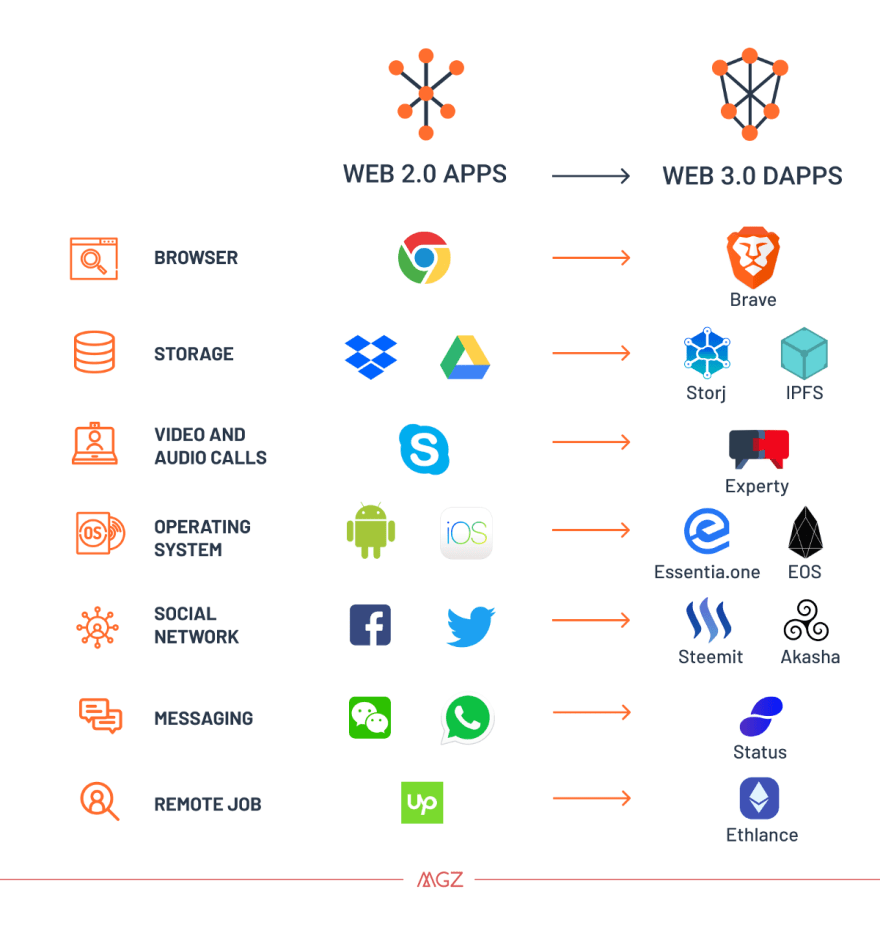
The Decentralized Web
Rise of distributed ledgers and blockchain storage enables data decentralization and creation of a transparent and secure environment, subverting Web 2.0's centralization, surveillance, and questionable use of data collected. This allows individuals to rightfully own their data.
A fantastic blog on The Coinbase Blog where it takes a deep dive into the tech stack used in Web 3.
Architecture of Web 2.0 vs Web 3.0
Web 3 adds a new infrastructure layer for applications to interact with, where users authenticate with their own wallet.
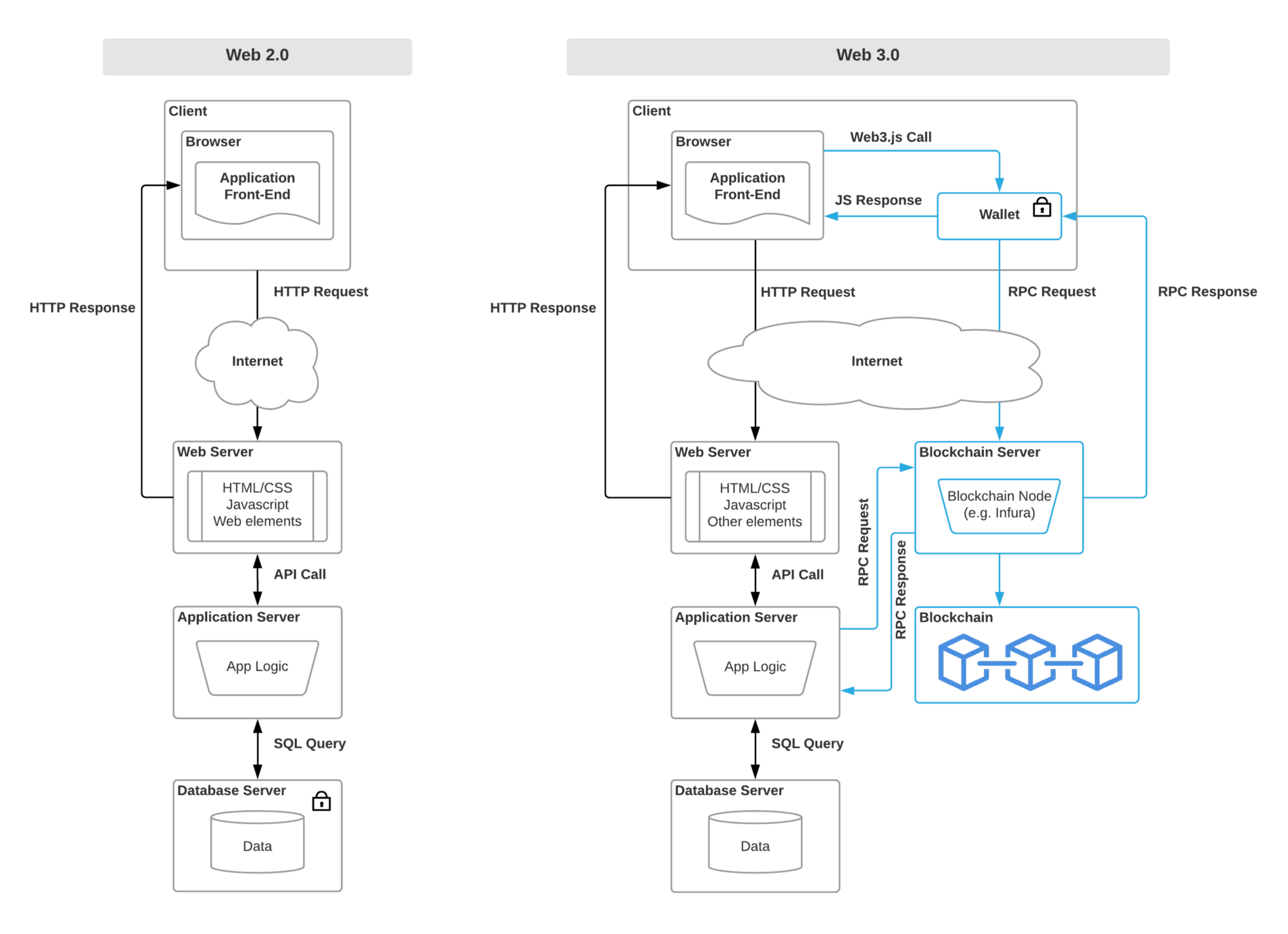
Source: The Coinbase Blog
Final Thoughts
I am definitely thrilled to be an aspiring developer in this era, where there are so many exciting areas to be further explored, especially with the rise of Web 3.0. I do look forward to the possibilities of what Web 3.0 can bring, both as a user and a developer.
However, I must admit that Web 3.0 is still in its infant stages with many uncertainties, and choosing this path as a developer could possibly lead to high opportunity cost, especially when Web 2.0 is already so rewarding. That being said, I believe that Web 2.0 still have a lot of potential and it is unlikely to be replaced by Web 3.0 anytime soon.